-2.png)
Commercial LPG vs Pipeline Gas: Which Is Better for Businesses in Singapore?
Updated: Mar 22

Choosing the right gas supply is a crucial decision for restaurants, cafés, hotels, and industrial kitchens in Singapore. The type of gas you use directly affects cooking performance, operational costs, safety compliance, and business continuity.
Two common options dominate the market commercial LPG and pipeline gas. While both are reliable energy sources, they differ significantly in installation requirements, heat output, flexibility, and long-term suitability for commercial use.
In this guide, we provide a detailed comparison of commercial LPG vs pipeline gas, helping Singapore businesses make an informed decision based on performance, safety, and operational needs.
What Is Commercial LPG?
Commercial LPG (Liquefied Petroleum Gas) is a high-pressure fuel stored in cylinders or bulk tanks and supplied directly to businesses. It is widely used across Singapore’s F&B industry due to its strong heat output and flexibility.
How Commercial LPG Works for Businesses
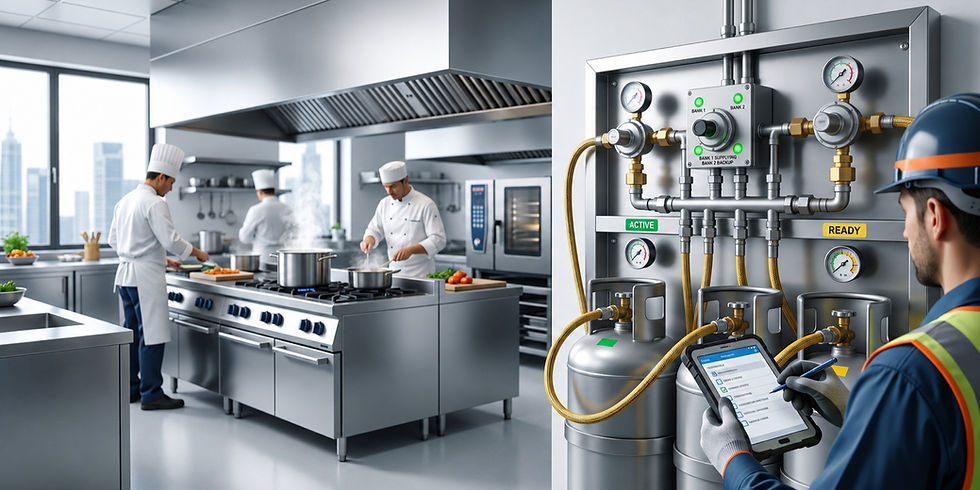
Commercial LPG is delivered in cylinders or tanks and connected to kitchen equipment through regulated systems. Businesses can scale usage easily by adjusting cylinder capacity based on demand.
Businesses That Commonly Use Commercial LPG
Restaurants and hawker stalls
Hotels and catering services
Food factories and cloud kitchens
Temporary or mobile food setups
Commercial LPG is especially suitable for businesses that require consistent flame control and uninterrupted cooking operations.
What Is Pipeline Gas?
Pipeline gas is supplied through a fixed underground network directly connected to a building. It is commonly used in locations with existing gas infrastructure and stable consumption patterns.
How Pipeline Gas Is Supplied
Pipeline gas flows continuously from the main gas network into the premises, eliminating the need for cylinder storage or refills.
Businesses That Prefer Pipeline Gas
Cafés with low cooking intensity
Office pantries
Buildings already connected to gas pipelines
Pipeline gas is often chosen for its convenience, but it may not meet the performance needs of high-demand kitchens.
Commercial LPG vs Pipeline Gas: Key Differences
Installation and Setup Requirements
Commercial LPG requires cylinder storage and safety-approved installations, which can be set up relatively quickly. Pipeline gas, on the other hand, depends on existing infrastructure and may involve higher initial installation costs if pipelines are not already available.
Heat Output and Cooking Performance
One of the biggest advantages of commercial LPG is its high heat output. It delivers strong, instant flames, making it ideal for wok cooking, grilling, and high-volume food preparation. Pipeline gas generally provides lower pressure, which may limit performance during peak hours.
Cost Comparison for Businesses
Pipeline gas often has stable monthly billing, while commercial LPG costs vary based on usage. However, for businesses that rely on intense cooking, commercial LPG can be more cost-effective due to faster cooking times and higher efficiency.
Supply Reliability and Business Continuity
Commercial LPG offers greater control over supply. With scheduled LPG delivery, businesses can ensure uninterrupted operations even during peak seasons. Pipeline gas disruptions, although rare, can affect multiple premises at once and may take longer to resolve.
Safety and Compliance in Singapore
Both gas options are safe when installed and maintained correctly. Reputable LPG suppliers follow strict safety regulations, conduct regular inspections, and provide certified equipment to meet Singapore safety standards.
Why Commercial LPG Is Often Better for F&B Businesses
Strong Flame Control for Professional Cooking
Commercial kitchens require precise flame control. Commercial LPG allows chefs to adjust heat instantly, improving cooking consistency and food quality.
Flexibility Without Infrastructure Limitations
Unlike pipeline gas, commercial LPG does not depend on fixed networks. This makes it ideal for new businesses, temporary locations, or expanding outlets.
Scalable for Growing Operations
As business demand increases, commercial LPG systems can be easily upgraded with additional cylinders or larger storage capacity without major renovations.
Choosing the Right Gas Solution for Your Business
The right gas choice depends on your business model:
Pipeline gas may suit small cafés or low-intensity kitchens with existing infrastructure.
Commercial LPG is better for restaurants, hotels, and food manufacturers that need strong heat, reliability, and flexibility.
Businesses that prioritise performance, scalability, and uninterrupted operations often find commercial LPG to be the more practical long-term solution.
The Role of a Reliable LPG Supplier
Working with a trusted LPG supplier is essential for safety and efficiency. A reliable supplier ensures:
Timely LPG delivery
Certified equipment and installations
Regular safety inspections
Responsive customer support
Choosing an experienced LPG supplier in Singapore helps businesses operate smoothly while meeting all regulatory requirements.
Final Thoughts
When comparing commercial LPG vs pipeline gas, there is no one-size-fits-all answer. However, for most F&B businesses in Singapore, commercial LPG offers better


Comments