-2.png)
Future of LPG in Singapore's F&B Industry

Singapore's food and beverage (F&B) sector is constantly evolving. From cloud kitchens and food delivery platforms to smart kitchen technologies and sustainability initiatives, businesses are adapting to changing consumer expectations and operational demands.
Amid these transformations, LPG continues to play a vital role in powering commercial kitchens across the country. But what does the future hold? In this article, we'll explore the Future of LPG in Singapore's F&B Industry, emerging trends shaping the market, and why LPG is expected to remain a key energy source for restaurants and food businesses in the years ahead.
The Current Role of LPG in Singapore's F&B Industry
Before looking ahead, it's important to understand why LPG remains widely used today.
LPG in Singapore F&B Industry operations supports:
Restaurants
Cafés
Food courts
Catering businesses
Hotels
Cloud kitchens
Central kitchens
LPG is commonly used for:
Cooking equipment
Woks and burners
Ovens
Grills
Commercial heating applications
Its flexibility and high heat output make it particularly suitable for professional food preparation.
Why LPG Remains Important for Singapore Commercial Kitchens
Many business owners ask:
Despite advancements in kitchen technology and alternative energy sources, LPG continues to offer several advantages.
High Heat Performance
Commercial kitchens require fast and consistent heating.
LPG provides:
Strong flame intensity
Quick temperature control
Efficient cooking performance
This is especially important for cuisines that rely heavily on high-heat cooking methods.
Reliable Energy Source
Restaurants cannot afford operational interruptions during peak service hours.
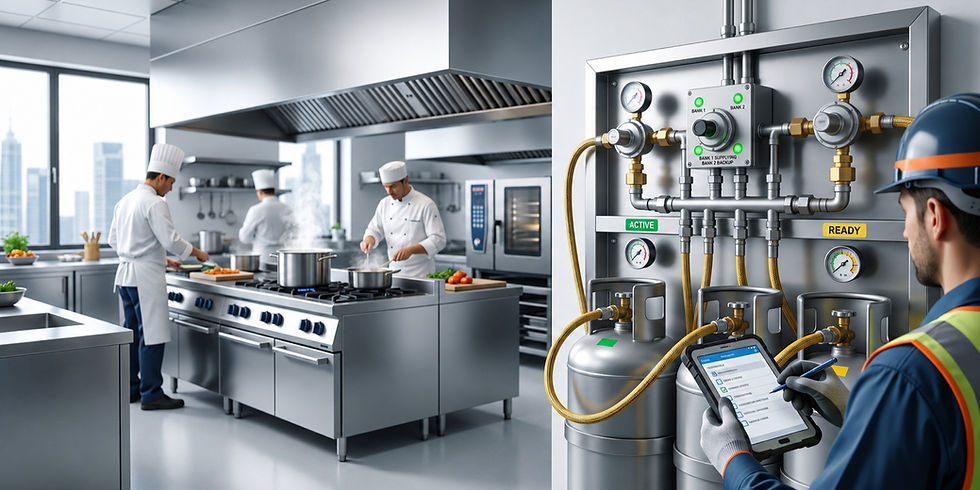
LPG systems can be designed with:
Cylinder banks
Automatic changeover systems
Manifold installations
Backup supply arrangements
This reliability is a major reason why many operators continue to rely on LPG for Restaurants Singapore.
Flexible Installation Options
Unlike energy sources that depend entirely on fixed infrastructure, LPG systems can be customized for various business environments.
This flexibility benefits:
New restaurant startups
Temporary food operations
Outdoor dining concepts
Remote food preparation facilities
Future of LPG in Singapore's F&B Industry
Quick Answer
The Future of LPG in Singapore's F&B Industry is expected to remain strong due to its reliability, efficiency, adaptability, and compatibility with modern commercial kitchen requirements.
While sustainability and energy efficiency will continue influencing industry decisions, LPG is likely to remain an important component of Singapore's commercial food service ecosystem.
Key LPG Trends in Singapore's Food and Beverage Sector
Understanding emerging trends helps businesses prepare for future opportunities.
1. Growth of Cloud Kitchens
Cloud kitchens have expanded significantly in recent years.
These operations often prioritize:
Fast setup
Flexible infrastructure
Efficient cooking systems
LPG supports these requirements by providing scalable energy solutions.
As cloud kitchens continue to grow, demand for flexible LPG systems may increase.
2. Increased Adoption of LPG Manifold Systems
Modern kitchens are moving away from standalone cylinder setups.
Instead, many businesses are investing in:
Centralized gas supply systems
Automatic changeover technology
These systems improve:
Safety
Operational efficiency
Supply reliability
This trend is shaping the future of Commercial LPG Solutions Singapore.
3. Smart Monitoring and Digital Integration
Technology is becoming an increasingly important part of kitchen operations.
Future LPG systems may include:
Remote monitoring
Consumption tracking
Predictive maintenance alerts
Automated refill management
These innovations help businesses improve efficiency while reducing downtime.
4. Greater Focus on Energy Efficiency
Rising operating costs encourage restaurants to seek more efficient energy solutions.
Future LPG technologies are expected to support:
Improved combustion efficiency
Reduced fuel waste
Enhanced appliance performance
Energy efficiency will likely remain a key focus across the industry.
5. Enhanced Safety Technologies
Safety remains a top priority in commercial kitchens.
Emerging LPG solutions increasingly incorporate:
Advanced leak detection systems
Automatic shut-off devices
Real-time monitoring technologies
Improved pressure regulation systems
These innovations contribute to safer kitchen environments.
How LPG Is Shaping the Future of Singapore Restaurants
One of the most important questions facing restaurant owners is:
LPG continues to support innovation by enabling:
Operational Flexibility
Restaurants can expand or modify kitchen layouts without major infrastructure changes.
Business Scalability
Growing businesses can increase LPG capacity as demand increases.
Reliable Food Production
Consistent fuel supply supports uninterrupted customer service.
Faster Kitchen Performance
High heat output remains valuable for modern commercial cooking techniques.
As the F&B sector evolves, LPG continues to provide the flexibility needed for growth and adaptation.
Future Energy Solutions for Singapore F&B Businesses
The future of energy in the F&B industry will likely involve a mix of technologies.
Hybrid Energy Approaches
Many businesses may combine:
LPG systems
Electric equipment
Energy-efficient appliances
This allows operators to optimize performance while managing costs.
Sustainable Operations
Sustainability is becoming a key business objective.
Future energy strategies may focus on:
Improved efficiency
Reduced emissions
Smart resource management
LPG can play a role within broader sustainability initiatives when used with modern, efficient equipment.
Challenges and Opportunities Ahead
Like any energy source, LPG faces both opportunities and challenges.
Opportunities
Expansion of food delivery businesses
Growth of cloud kitchens
Increased automation
Improved safety technologies
Smart energy management systems
Challenges
Evolving environmental policies
Energy diversification efforts
Rising operational expectations
Businesses that stay informed and invest in modern LPG infrastructure will be better positioned to adapt.
What Restaurant Owners Should Do Now
To prepare for future industry developments, restaurant owners should:
Upgrade Aging Equipment
Modern systems improve safety and efficiency.
Invest in Preventive Maintenance
Regular servicing helps maximize system performance.
Consider Manifold Systems
Centralized gas management improves reliability.
Monitor Energy Consumption
Data-driven decisions can improve operational efficiency.
Work With Experienced LPG Providers
Reliable suppliers can help businesses adapt to future industry changes.
Frequently Asked Questions (FAQs)
1. What is the future of LPG in Singapore's F&B industry?
LPG is expected to remain an important energy source due to its flexibility, reliability, high heat output, and suitability for commercial kitchens.
2. Why does LPG remain important for Singapore commercial kitchens?
LPG provides consistent cooking performance, flexible installation options, scalable supply solutions, and dependable fuel availability.
3. What are the latest LPG trends in Singapore's food and beverage sector?
Key trends include cloud kitchen growth, manifold system adoption, smart monitoring technologies, enhanced safety systems, and improved energy efficiency.
4. How is LPG shaping the future of Singapore restaurants?
LPG supports operational flexibility, scalability, reliable food production, and efficient commercial cooking operations.
5. Are commercial LPG solutions evolving in Singapore?
Yes. Modern solutions increasingly include automation, remote monitoring, safety enhancements, and advanced gas management systems.
6. Will LPG continue to be used in restaurants in the future?
Yes. While energy technologies continue to evolve, LPG remains a practical and efficient solution for many commercial kitchen applications.
7. What future energy solutions should Singapore F&B businesses consider?
Businesses may adopt hybrid energy strategies that combine LPG, energy-efficient appliances, and smart monitoring technologies.
Conclusion
The future of LPG in Singapore's F&B Industry remains promising as restaurants, cloud kitchens, hotels, and catering businesses continue seeking reliable, efficient, and flexible energy solutions. From supporting high-performance cooking to enabling scalable kitchen operations, LPG continues to provide significant value across the food service sector.
As LPG trends in Singapore evolve through digital monitoring, manifold systems, enhanced safety technologies, and energy-efficient innovations, businesses that invest in modern LPG infrastructure will be well-positioned for long-term success.
Whether you're opening a new restaurant or upgrading an existing operation, understanding the future direction of Commercial LPG Solutions Singapore can help you make smarter energy decisions and stay competitive in an increasingly dynamic F&B landscape.
Looking for reliable LPG solutions for your restaurant or commercial kitchen? Our team specializes in LPG system design, installation, maintenance, and supply solutions tailored to Singapore's F&B industry. Contact us today, book a consultation, visit our website, or get started with a future-ready LPG solution for your business.


Comments